
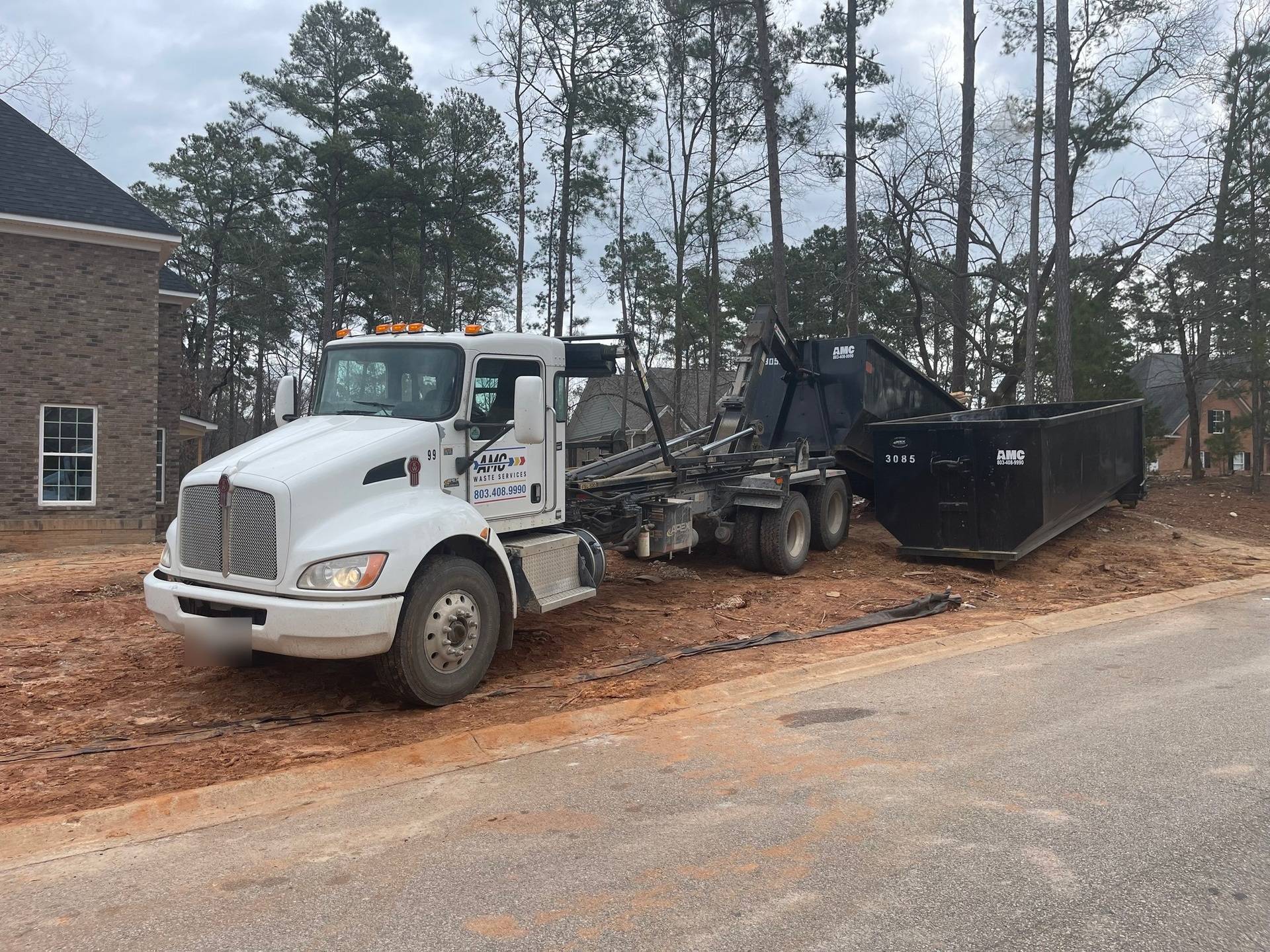
A Full Dumpster Is a Stopped Job
On a build, debris is a schedule problem. Framing waste piles up fast, a full dumpster backs up the whole site, and a crew that has nowhere to throw scrap starts stacking it where the inspector will find it.
A bigger dumpster only delays the problem. What keeps a site clean is a swap rhythm: the full dumpster leaves and an empty one lands in the same move, one truck trip, no gap. We run those moves all week across the Midlands, so adding your site to the loop is routine.
Multiple Dumpsters, One Call
Bigger jobs run three or four dumpsters at once: one at the cut station, one at the back of the house, one staged for the roofers. We keep a big fleet on purpose, around 7,000 to 9,000 deliveries a year across the Midlands, which is why a contractor can get several on one site without draining anyone's inventory.
One number handles all of it. You call, Zack or Amanda answers, and the person on the phone is the person who runs the route, so a schedule change gets made while you're still on the line.
What the Phases Usually Need
A rough pattern from the builds we service across Richland, Lexington, and Kershaw counties: framing and dry-in fill a 30-yard with cutoffs, sheathing scrap, and packaging faster than any other phase. Mechanical rough-in barely makes trash. Drywall hangs heavy, so that phase is where the 20-yard's included 2 tons gets used, and paint-and-punch is light again.
Roofing on the same project is its own load. Shingles run so heavy that mixing them into the framing dumpster eats the weight allowance in a day, so roof tear-offs get a dedicated dumpster sized to the square count.
Concrete work, footings, flatwork demo, and curb cuts ride separately too, on a heavy-debris dumpster priced by weight. Sorting those three streams, general debris, shingles, and masonry, is most of what keeps a build's disposal line predictable, and we'll help you set it up on the first call.
Set a Standing Schedule and Forget It
The builders who never think about debris are the ones on a standing schedule: swap every Tuesday, or swap at rough-in, dry-in, and punch. Tell us the phases and the schedule runs itself. If the pace changes, the schedule changes with one text.
Two site tips that save everyone time. First, tell us which section of the subdivision you're in, because brand-new streets don't always show on the map apps yet. Second, keep the dumpster approach clear on swap day: a parked trailer in front of the dumpster is the only thing that slows the move down.
New build, remodel, or roof program, the 20 and 30-yard dumpsters carry most job sites, and the booking page shows the exact rate for your address before you commit.
Need a dumpster in the Midlands? See your exact price on the booking page, or call and talk to Zack at (803) 408-9990.